
Understanding the ASEAN Economic Community Framework
A breakdown of the AEC’s core pillars, tariff elimination schedules, and how they’ve transformed intra-regional commerce since 2015.

What’s the ASEAN Economic Community?
The ASEAN Economic Community (AEC) isn’t just another trade agreement. It’s a commitment from ten Southeast Asian nations to create a single market and production base. Launched in December 2015, the framework fundamentally reshaped how goods, services, and investment move across borders in the region.
Think of it this way: before the AEC, businesses faced different tariff rates, customs procedures, and regulatory standards in each country. Today, tariffs on thousands of products have dropped to zero, and companies can operate more seamlessly across the entire region. It’s a work in progress, but the transformation has been real.
The Four Pillars of the AEC
The framework rests on four interconnected pillars that work together to create regional integration.
Free Flow of Goods
The ASEAN Trade in Goods Agreement (ATIGA) eliminated tariffs on over 98% of products. Manufacturers can now source materials across borders without hitting the duty walls that existed before 2015.
Services Liberalization
The ASEAN Framework Agreement on Services opens doors for service providers—accountants, architects, engineers, and healthcare professionals—to work across member nations more freely than before.
Investment Facilitation
The ASEAN Comprehensive Investment Agreement (ACIA) gives investors clearer rules and better protection. Capital flows more predictably between countries, and companies expand regional operations with greater confidence.
Skilled Labor Movement
ASEAN Mutual Recognition Arrangements (MRAs) allow qualified professionals to practice in multiple countries. Engineers certified in Thailand can work in Vietnam. Nurses from the Philippines can take positions across the region.
How Tariff Elimination Works
The tariff elimination schedule is the backbone of goods trade. Products are organized into tracks—some eliminated immediately in 2015, others phased out over 5, 8, or even 10 years depending on sensitivity.
For example, electronics and machinery hit zero tariffs quickly. But agricultural products like rice moved more slowly because many nations rely on farming for employment. Malaysia’s automotive sector negotiated longer phase-outs to protect local manufacturers. These schedules aren’t one-size-fits-all—countries work within the framework but maintain some flexibility for strategic sectors.
Key Point: The elimination schedule means that by 2025, most non-sensitive products between ASEAN members face zero tariffs. This has already reshaped supply chains dramatically.


Real Impact on Trade Flows
Intra-ASEAN trade has grown substantially since 2015. Before the AEC, regional trade accounted for about 20% of total ASEAN trade. Today, it’s closer to 24-26%—not dramatic, but meaningful for a region of over 600 million people.
Where you really see the change is in supply chains. Electronics manufacturers now assemble components across multiple countries rather than concentrating production in one location. A smartphone might have parts made in Thailand, Malaysia, Vietnam, and the Philippines. This wouldn’t have been cost-effective before tariff elimination. Automotive companies have similarly restructured operations. Malaysian car makers now source engines from Indonesia, transmission parts from Thailand—building truly regional value chains instead of just national ones.
Malaysia, Indonesia, and Thailand handle about 70% of ASEAN’s internal trade. Vietnam’s share is growing rapidly as manufacturing costs shift. Smaller nations like Laos and Cambodia benefit from improved market access, though they still face infrastructure challenges.
Iskandar Malaysia’s Strategic Role
Iskandar Malaysia, located in Johor just across the strait from Singapore, has positioned itself as a key node in ASEAN’s economic integration. The development corridor covers 2,217 square kilometers and’s home to petrochemical facilities, semiconductor manufacturing, and logistics hubs.
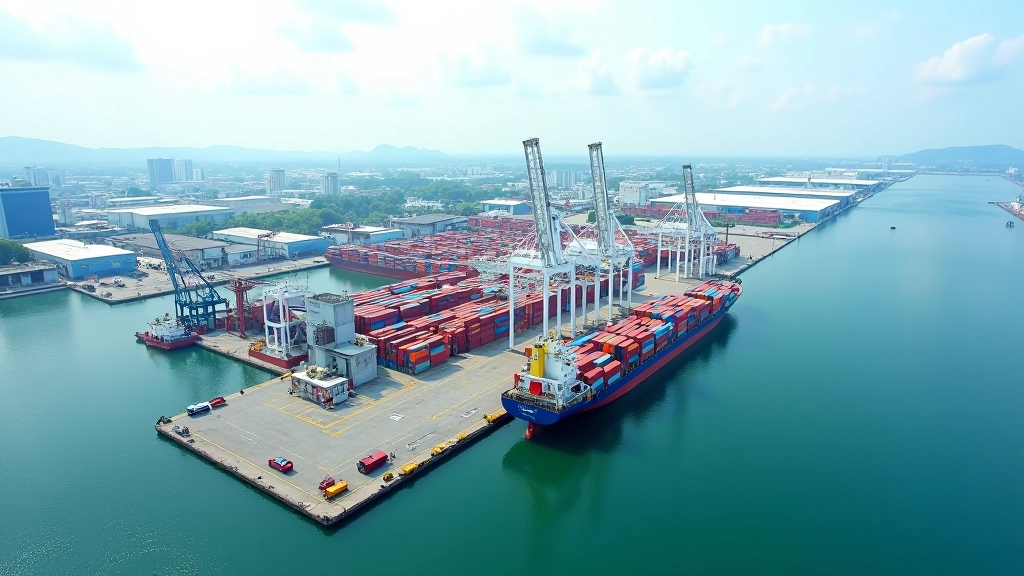
Under the AEC framework, Iskandar benefits directly. Companies operating there can access raw materials from Indonesia, move components through Singapore, and distribute finished goods across ASEAN without the tariff barriers that once made regional integration impractical. The region has become a natural transshipment point for goods moving through Southeast Asia. Port facilities in Tanjung Pelepas handle increasing volumes of regional trade—containers from Thailand and Vietnam, refined products from Indonesia, manufactured goods heading out to ASEAN markets.
The AEC didn’t create Iskandar’s advantages, but it amplified them. Geography matters less when tariffs are zero, but logistics, infrastructure, and proximity to major markets still count. That’s why Iskandar’s evolution as an economic corridor accelerated after 2015.
Challenges and Ongoing Work
The AEC framework is solid, but implementation remains uneven. Several obstacles persist:
Non-Tariff Barriers
While tariffs fell, non-tariff barriers remain stubbornly high. Inconsistent standards, complex customs procedures, and varying regulations mean businesses still face friction. A product legal in Thailand might need re-certification in Indonesia. Harmonizing standards is slower work than cutting tariffs.
Infrastructure Gaps
Land routes between nations are still underdeveloped in places. Cross-border roads, rail networks, and digital customs systems aren’t uniformly modern. Vietnam’s improving rapidly, but some routes through Laos remain challenging for high-volume commerce.
Capacity Disparities
Wealthier nations like Singapore and Malaysia benefit more immediately. Smaller, less developed economies like Cambodia and Laos haven’t captured as much value yet. Regional integration works best when all participants build capacity simultaneously—that’s still a work in progress.
Labor Movement Restrictions
While MRAs exist for professionals, actual cross-border movement is limited by visa restrictions and local protectionism. Countries are cautious about labor migration. The framework allows it, but national policies often don’t match the ambition.

The Path Forward
The AEC framework isn’t static. ASEAN nations continue refining and expanding it. Digital trade is the next frontier—e-commerce regulations, data flows, and digital service standards. Regional agreements like the Regional Comprehensive Economic Partnership (RCEP) build on the AEC foundation, integrating ASEAN more deeply with China, Japan, South Korea, Australia, and New Zealand.
Sustainability standards are also evolving. Younger companies in the region increasingly face pressure from global markets to meet environmental and labor standards. The AEC framework doesn’t mandate these yet, but expect movement toward harmonized green standards and responsible supply chain practices. Vietnam’s push for green manufacturing, Thailand’s renewable energy targets—these are shaping regional norms even without formal AEC requirements.
For Malaysia and Iskandar specifically, the coming decade is about consolidation. The tariff framework’s done its job. Now it’s about moving up the value chain—from assembly to design, from low-cost production to innovation hubs. That requires better education, R&D investment, and infrastructure. The AEC created the conditions for that transition. Whether ASEAN nations capitalize on it depends on what comes next.
Key Takeaways
The AEC eliminated tariffs on 98% of products between member nations starting in 2015, fundamentally reshaping regional supply chains and making cross-border production viable.
Four pillars drive integration: free flow of goods, services liberalization, investment facilitation, and skilled labor movement—creating a more interconnected region.
Non-tariff barriers remain a challenge. While tariffs fell, inconsistent standards, customs procedures, and regulations still create friction for regional commerce.
Intra-ASEAN trade has grown from 20% to 24-26% of total regional trade, with electronics, automotive, and manufacturing sectors leading the way.
Want to Explore Further?
The AEC framework is complex, but understanding its fundamentals helps you grasp how Southeast Asian economies are interconnecting. Explore the related articles below to dive deeper into supply chains, regional corridors, and trade dynamics.
Discover Related TopicsRelated Articles


Disclaimer
This article is provided for educational and informational purposes only. It offers an overview of the ASEAN Economic Community framework and regional trade dynamics. Information is current as of March 2026, though trade policies and economic conditions evolve continuously. For specific business decisions, investment planning, or policy analysis, consult with qualified economists, trade specialists, or government trade agencies. ASEAN member nations implement AEC commitments at different speeds and with varying approaches—circumstances vary significantly between countries and sectors. This content is not professional business or investment advice.